
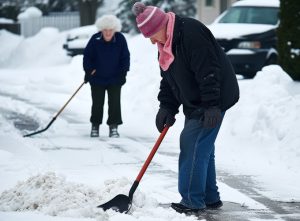
 Winter brings beautiful snowfalls — but also a hidden danger many people overlook: the strain that snow shoveling puts on the heart. For individuals with heart or vein conditions, this routine winter chore can significantly increase the risk of cardiac events, including heart attacks.
At Advanced Heart and Vein Center, your safety is our priority. Here’s what you need to know to stay heart-healthy when the temperatures drop.
Why Shoveling Is Hard on the Heart
Shoveling snow combines heavy physical exertion with cold temperatures, both of which cause stress on the cardiovascular system.
Cold weather naturally constricts blood vessels, increasing blood pressure. When you add sudden, strenuous activity like lifting wet snow, the heart has to work much harder to pump blood.
For people with coronary artery disease, vein issues, high blood pressure, or risk factors such as diabetes or smoking, this combination can be dangerous.
Warning Signs of Cardiac Stress
While shoveling, pay close attention to what your body is telling you. Stop immediately and seek medical help if you notice:
- Shortness of breath beyond what’s normal
- Chest discomfort, tightness, or pressure
- Pain radiating to the arm, jaw, neck, or back
- Light-headedness, dizziness, or sudden weakness
- Cold sweats or nausea
These symptoms can indicate a potential heart attack or severe cardiac stress. Even mild signs should not be ignored.
Tips to Reduce Heart Risk While Shoveling
To protect your heart this winter, keep these essential safety tips in mind:
1. Warm Up Before You Head Outside
A few minutes of stretching or light indoor movement can prepare your muscles and reduce strain on your heart.
2. Dress for Warmth
Wear layers, gloves, and a hat to keep your body warm and reduce blood vessel constriction.
3. Take Frequent Breaks
Shovel for short intervals and rest often. Avoid pushing yourself to finish quickly.
4. Push, Don’t Lift
Whenever possible, push the snow instead of lifting heavy loads. If lifting is necessary, use smaller shovel scoops.
5. Avoid Shoveling Right After Eating or Smoking
Both can put additional strain on the heart.
6. Know Your Limits
If you have heart disease, vein problems, or are at increased cardiovascular risk, consider asking a neighbor for help or hiring a snow removal service.
Who Is Most at Risk?
You may be at higher risk for heart complications from shoveling if you have:
- Coronary artery disease
- History of heart attack or stents
- Poor circulation or vascular disease
- High blood pressure
- Diabetes
- Obesity
- Sedentary lifestyle
- Smoking history
If you fall into one of these categories, talk to your cardiologist before engaging in strenuous winter activities.
When to Seek Medical Attention
If you or someone around you experiences chest pain or collapse while shoveling, call 911 immediately. Quick action saves lives.
For non-emergency symptoms or chronic discomfort during winter activity, schedule an evaluation with our cardiovascular specialists.
Your Heart’s Health Comes First
Shoveling snow may seem like a simple seasonal chore, but for many people, it poses a real risk. By listening to your body and taking preventive measures, you can protect your heart this winter.
At Advanced Heart and Vein Center, we are here to help you stay healthy year-round.
Stay safe, stay warm, and put your heart’s health first!